Three rules against phone scams – Infographic
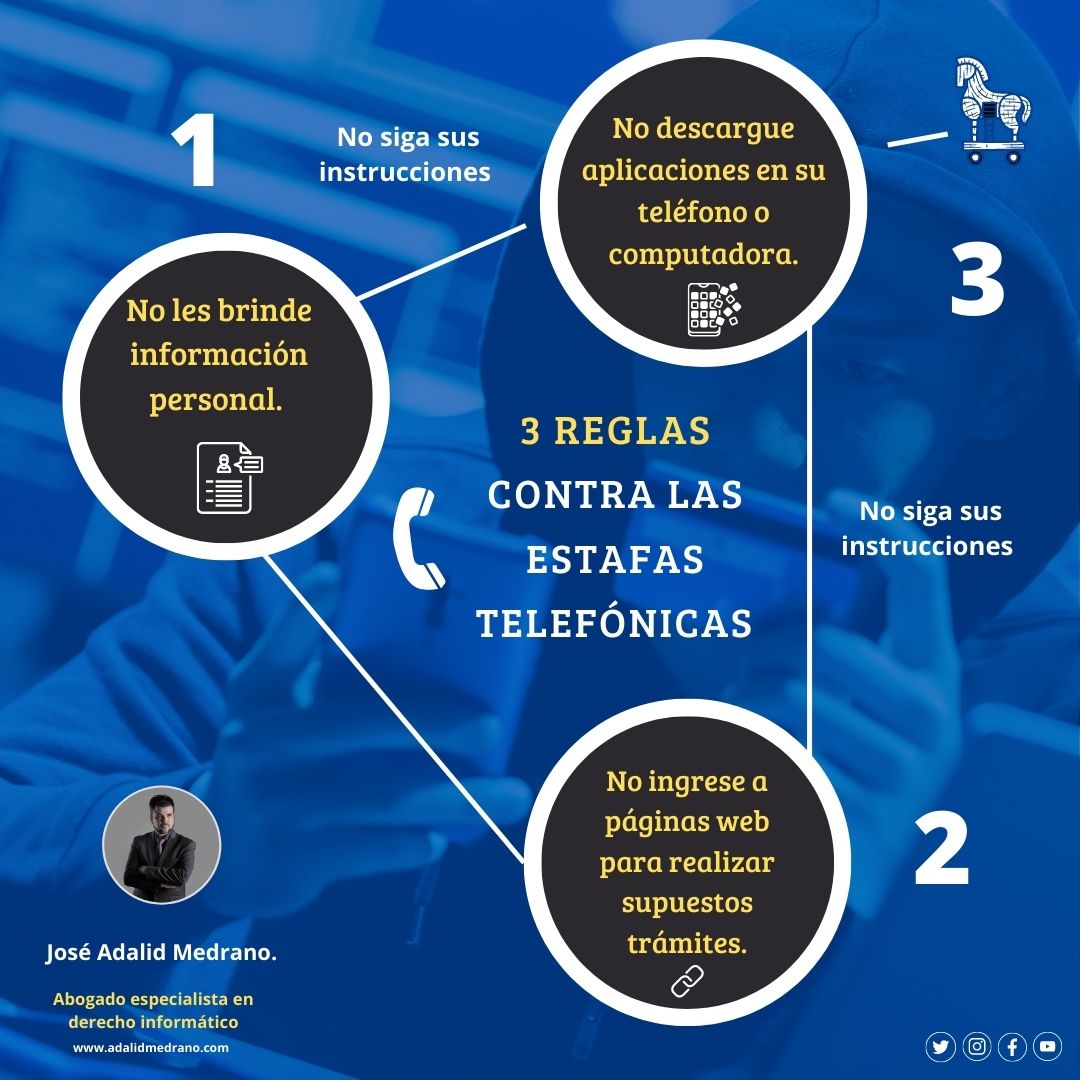
Here are 3 rules to avoid falling victim to phone scams, so if a supposed bank employee or anyone else calls you to carry out some procedure, possibly an urgent one:
1. Do not give them any personal information: Criminals see information as a puzzle, and the piece of data you give them could be the piece they are missing for their criminal purposes, so you should avoid giving out any personal information through channels other than in person.
Under no circumstances should you give them passwords, PINs or codes. If you are told that a code will be sent to you for some procedure, be careful, because they may be trying to access your email or bank account.
2. Do not go to websites to carry out supposed procedures: Criminals know that many people already follow rule 1 against phone scams, and to win your trust they will tell you that you do not need to give them any information. Then the scammer will ask you to go to a website controlled by the criminal group, where they will try to get you to:
- Type in information they need to commit computer fraud (passwords, tokens, among others).
- Install a program that lets them take actions from your computer or device.
Bear in mind that simply visiting the site puts your computer security at risk.
3. Do not download apps on your phone or computer:
With a program installed on your phone or computer, criminals can take all kinds of actions against you, which makes this the most dangerous form of this type of scam. In other countries, they have used apps available on Google Play or other official stores to trick users into installing apps that supposedly have other functions but end up impersonating the bank’s official app or capturing login details.
In Costa Rica, the most common approach is the support agent who asks you to install an app so they can help you with a supposed procedure.
No matter how convincing the scam is, if you follow these steps and tell them that you will call your bank directly at the number you have for it, you will not fall for fraud that uses this channel.
And remember: the call may only be meant to distract you, so do not hesitate to hang up.
I hope you find these tips useful.
The infographic (in Spanish):


Originally published in Spanish.